Lead Product Designer, Agentic AI & Emerging Tech
"JQ is the most prolific, creative, and innovative person I've ever worked with. Brilliant ideas seem to flow from him in every conversation, and what's even more impressive is his ability to execute-whether it's an app, a game, or a billion-dollar startup idea at a pace l've rarely seen.
What sets JQ apart is his ability to see possibilities before the rest of us do. He's far ahead when it comes to using Al as a true thought partner, not just a tool. He's taught our team how to move from experimenting with Al to confidently leveraging it to accelerate the journey from a spark of an idea to a fully functioning MVP, often in just a day or two.
JQ is a rare talent, equal parts visionary and builder-and I feel lucky to have worked alongside him on the Growth UX team at Salesforce."
What sets JQ apart is his ability to see possibilities before the rest of us do. He's far ahead when it comes to using Al as a true thought partner, not just a tool. He's taught our team how to move from experimenting with Al to confidently leveraging it to accelerate the journey from a spark of an idea to a fully functioning MVP, often in just a day or two.
JQ is a rare talent, equal parts visionary and builder-and I feel lucky to have worked alongside him on the Growth UX team at Salesforce."
— Michael Weimann, Experience Design Director - Salesforce
Generative Canvas is Salesforce’s first AI-assembled workspace, an adaptive interface that builds itself around user intent, data, and context. I led the design vision and partnered with product and engineering to define how the system interprets intent, orchestrates data, and generates the right surfaces automatically. My team designed, built, and shipped the first working prototype in just five months. The work helped establish patterns for intent-driven workflows, contextual assembly, and action-oriented experiences that became foundational to Salesforce’s agentic UX strategy and directly influenced Slack’s emerging agentic OS direction, showcased at Dreamforce 2025.
Generative Canvas began with a straightforward goal: People should be able to express what they need in plain language and have the system assemble the right workspace around that request. Instead of forcing users to navigate tools, hunt for records, and stitch information together themselves, the experience started with intent and responded with structure.
I helped define an interaction model that made intent the starting point, allowing vague requests to become usable enterprise workspaces. One of the core problems in AI UX is that users are expected to know how to prompt the system well. I pushed for a more context-aware approach that leaned on Salesforce data, integrations, and relevant signals so the experience could infer more, ask less, and produce useful output from minimal input.
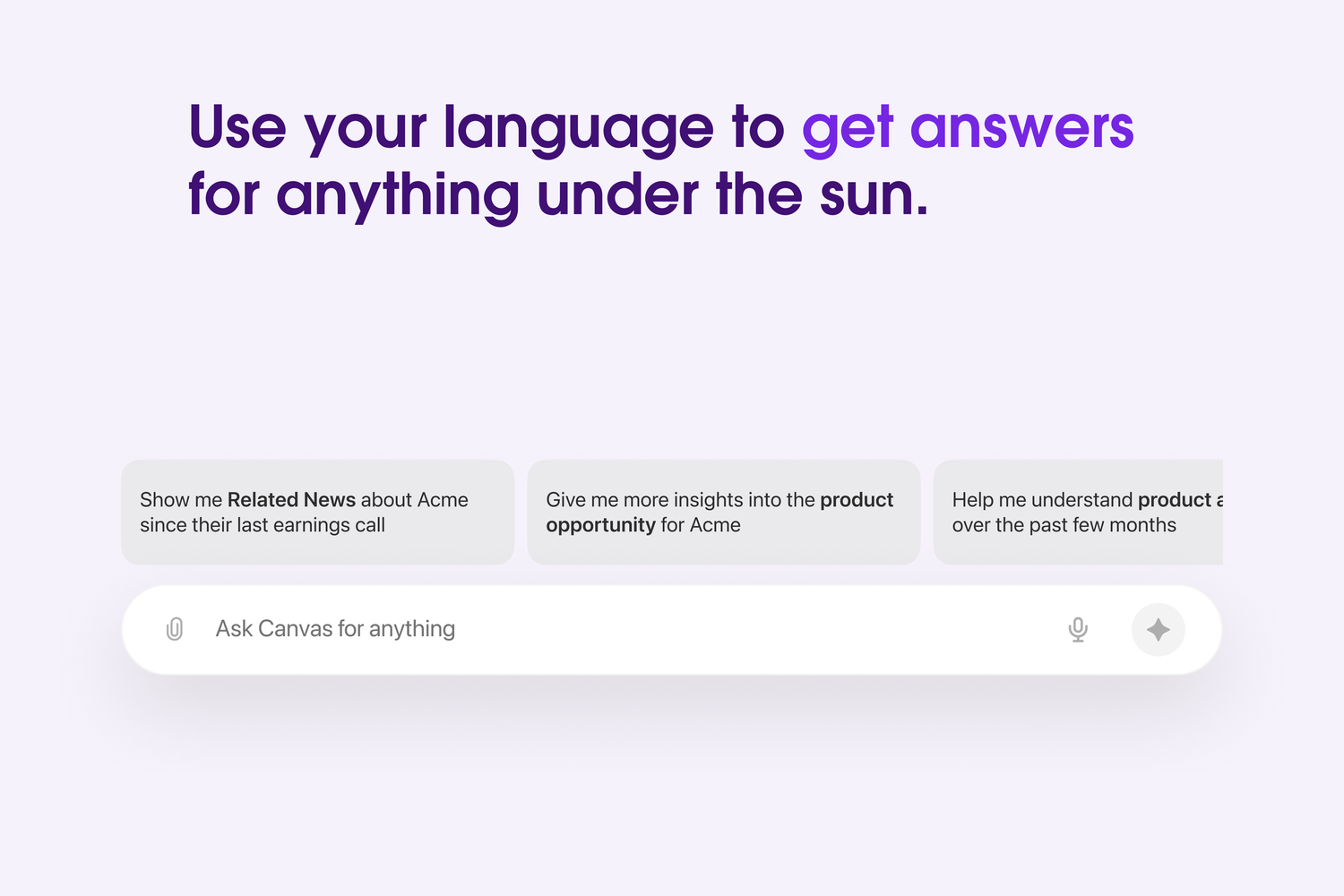
The experience was designed to adapt to the user’s role, priorities, and working context. Rather than showing a fixed interface, the system could generate a more relevant starting point based on the signals that mattered most in the moment.
I helped shape how the experience could feel specific and useful instead of generic, with a focus on relevance, clarity, and day-to-day usability.
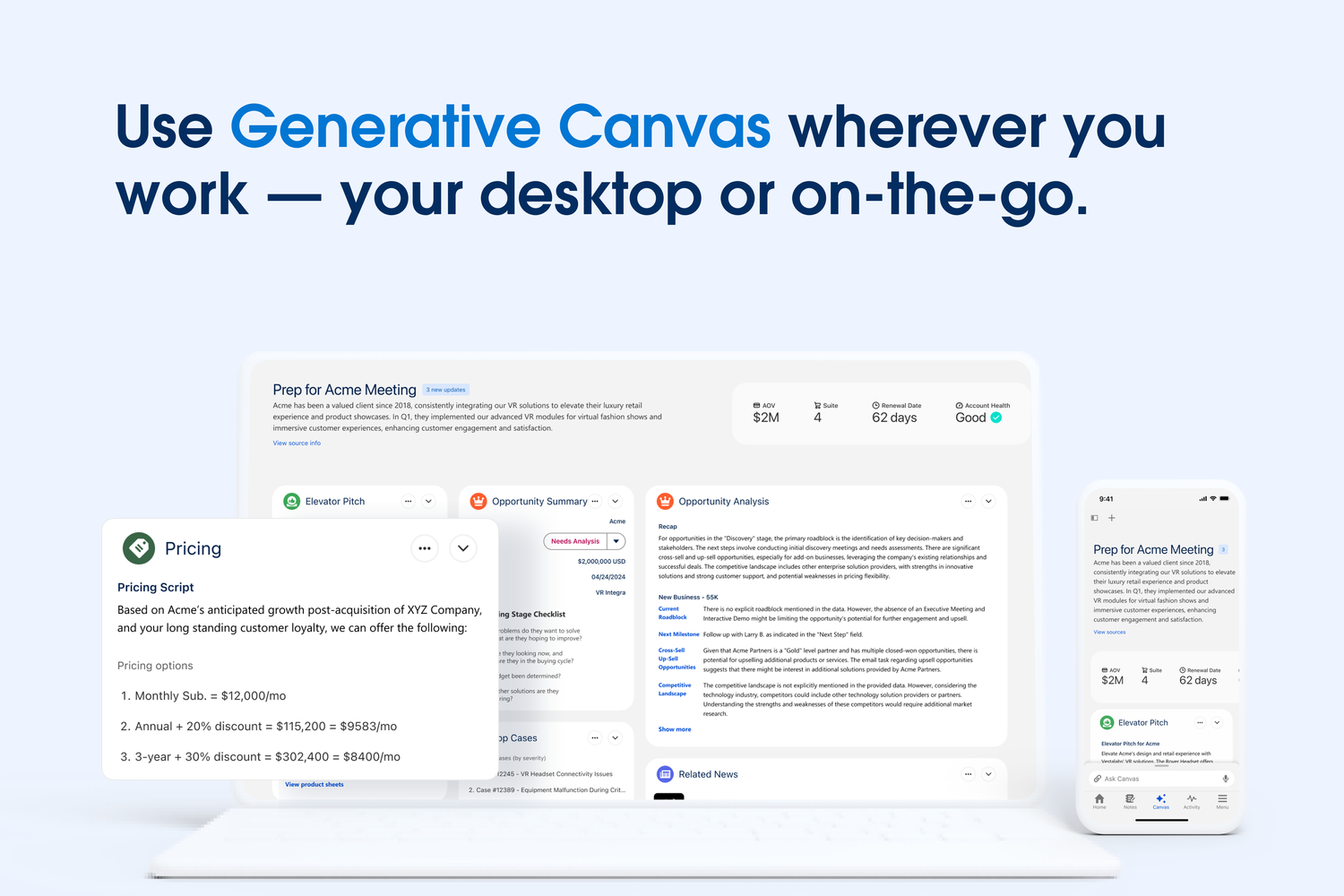
A core part of the concept was bringing together structured and unstructured information into one working surface. That meant combining records, documents, meetings, communications, and surrounding context in a way that reduced hunting and increased readiness.
I worked on experience patterns for how multiple sources of context could come together in a way that felt coherent, legible, and actionable.
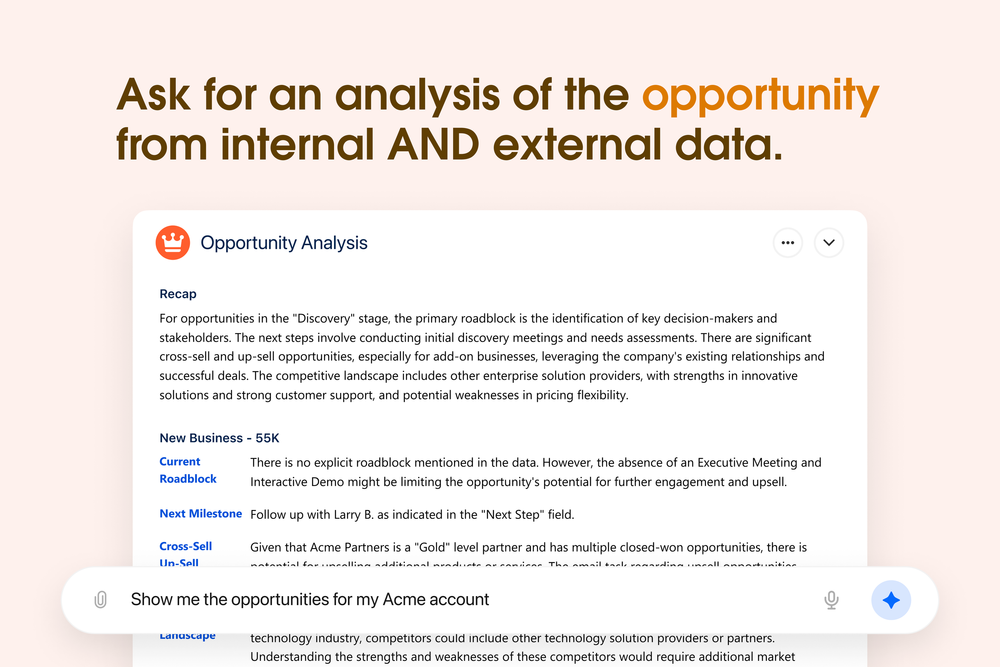
The value of the canvas was not just collecting information. It was helping people quickly understand what mattered, what had changed, and where attention should go next. Insights needed to appear as part of the workflow, not as a separate reporting destination.
I helped define patterns for presenting insights inside the experience so the interface could support judgment and next steps, not just display data.
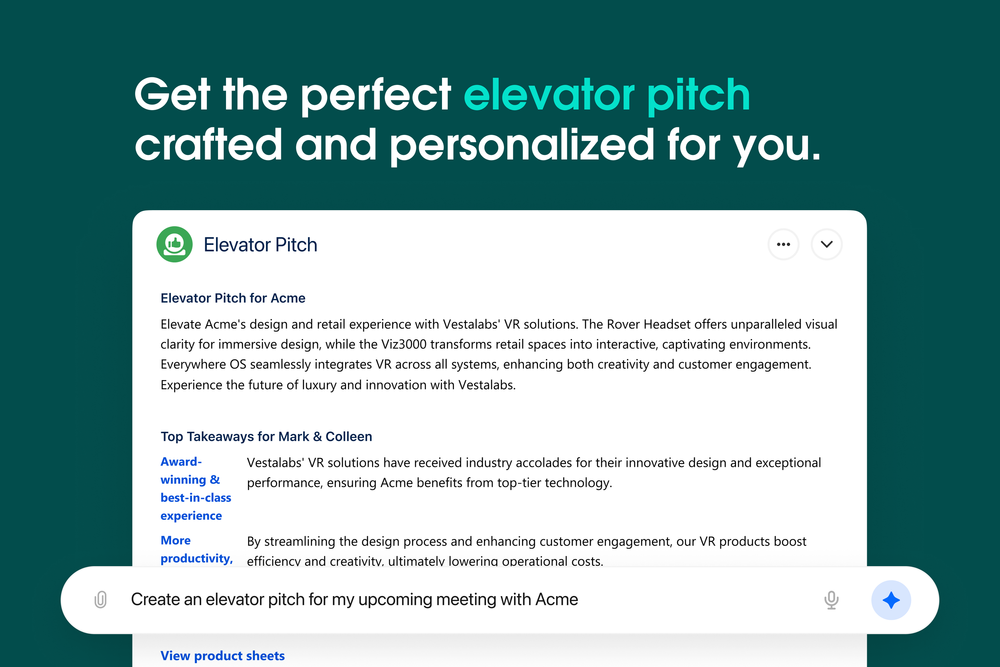
The system was designed to go beyond summary and support action. Once the workspace had been assembled, it could help users create outputs, prep for decisions, and move work forward without jumping between disconnected tools.
I contributed to the interaction patterns for moving from generated context into useful output, with an emphasis on control, trust, and reducing friction.
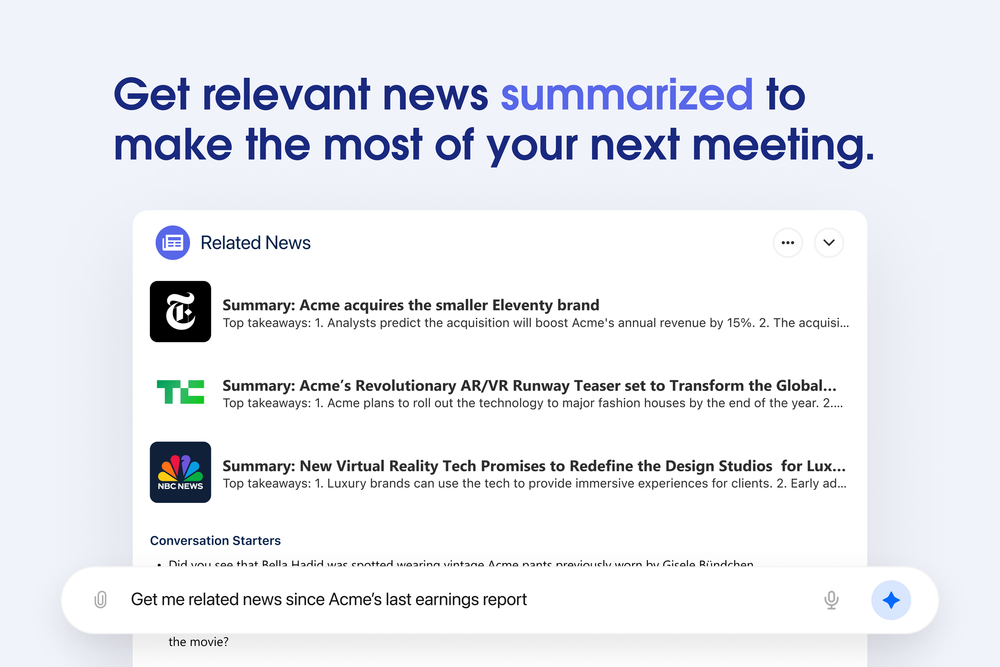
Generative Canvas was an early exploration of what AI-native enterprise UX could look like. The ideas developed through the work helped establish patterns that later showed up in broader generative and agentic directions across Slack and Salesforce surfaces.
This work gave me the chance to help shape early design patterns for AI-native workflows that influenced thinking beyond a single prototype.
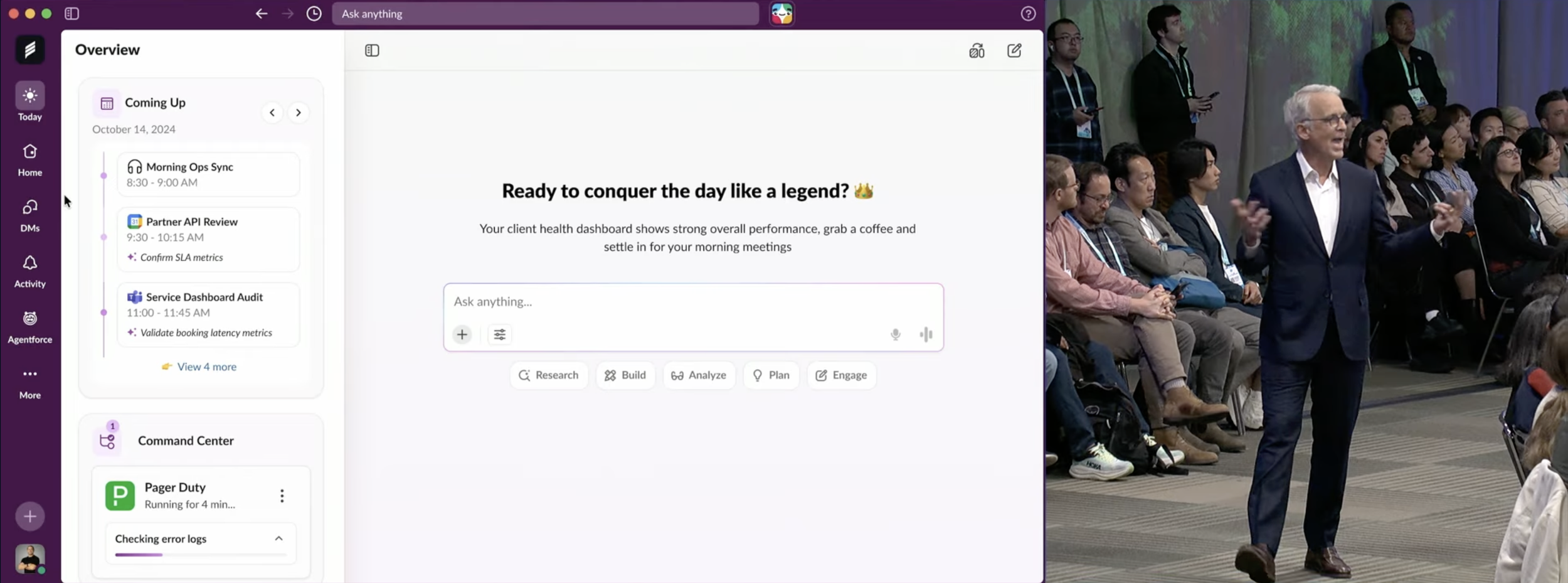
Generative Canvas was an early exploration of what AI-native enterprise UX could look like. The ideas developed through the work helped establish patterns that later showed up in broader generative and agentic directions across Slack and Salesforce surfaces.
This work gave me the chance to help shape early design patterns for AI-native workflows that influenced thinking beyond a single prototype.